|
ECRI
Home : Geographic
Profiling : What is Geographic
Profiling?

Geographic profiling is an investigative methodology
that uses the locations of a connected series of crimes to determine
the most probable area of offender residence. It is generally applied
in cases of serial murder, rape, arson, and robbery, though it can
be used in single crimes (auto theft, burglary bombing, etc.) that
involve multiple scenes or other significant geographic characteristics.
The basis of geographic profiling is the link between geographic
crime site information and the known propensities of serial criminals
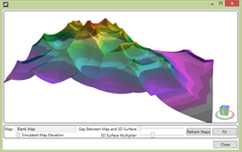
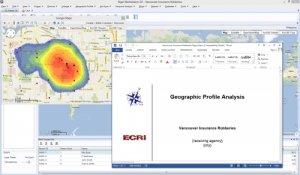
in their selection of a target victim and location. The system produces
a map of the most probable location of the criminals centre
of activity, which in most cases is the offenders residence.
When linked with additional information relating to the crime incidents,
and with additional data sources, such as motor vehicles databases
and suspect databases, geographic profiling has been proven to have
a profound impact on the effectiveness of a police investigation.
Geographic profiling can be used as the basis for
several investigative strategies, including suspect and tip prioritization,
address-based searches of police record systems, patrol saturation
and surveillance, neighbourhood canvasses and searches, DNA screening
prioritization, Department of Motor Vehicle searches, postal/zip
code prioritization and information request mail-outs. It is important
to stress that geographic profiling does not solve cases, but rather
provides a method for managing the large volume of information typically
generated in major crime investigations. It should be regarded as
one of several tools available to detectives, and is best employed
in conjunction with other police methods. Geographic crime patterns
are clues that, when properly decoded, can be used to point in the
direction of the offender.
NEXT: How
does Geographic Profiling work? >>
|